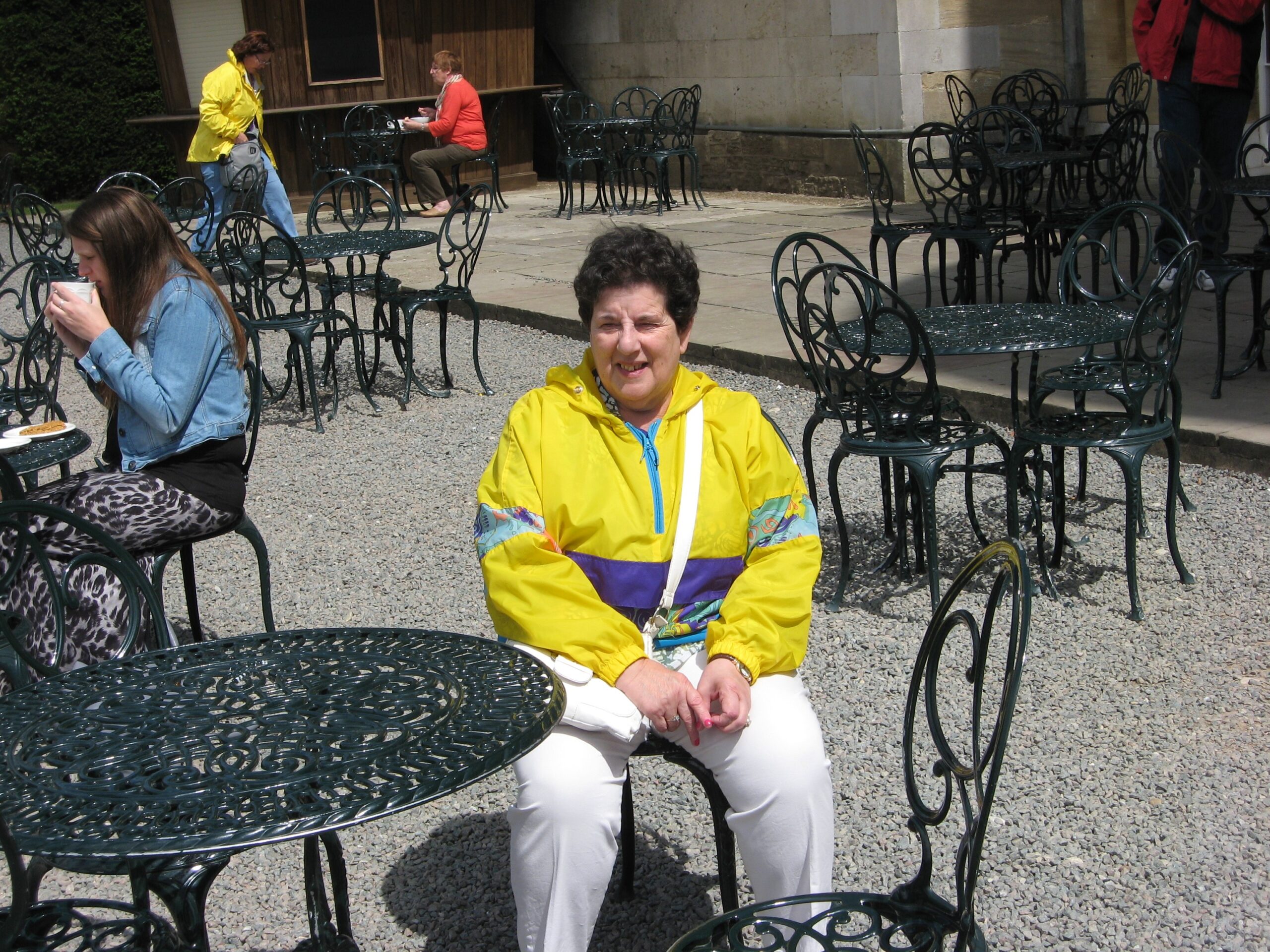
Ours was a great love story that we will continue together some day (Unknown).
When Frank and I walked into the mayor’s office, Don Amos was busy looking at some documents. Frank said, do you have a couple of minutes to meet Mir who is here to explore the possibilities of serving on one of our committees. The Mayor said, come on in guys. I am always interested in meeting folks who are motivated to serve on our committees. He got up and advanced towards me to shake hands and asked us to sit down. I shook hands and said, your worship, I was totally impressed with your remarkable background and thank you for your services. He said, just call me Don, please.
Frank said, here’s Mir’s resume for your perusal. Don took the resume and very quickly browsed it before he said, we don’t get to meet people like you every day here in Sidney, Dr. Ali. I said, please call me Mir. Don said, Mir. You’re a pioneer of computers who was working on the mainframe computers in the 1960’s when none of us knew how to spell computers. I said you’re giving me more credit than I deserve, Don. I continued – having a Ph.D. in computer science does qualify me to be a computer scientist, but I never invented computers to be called a pioneer.
Don asked – What was the emphasis on your Ph.D., Mir. I said it was on Artificial Intelligence (AI). Don said – WOW. I would like to spend some time with you in the future understanding AI but for now how can we help you, Mir. Frank spoke and said, Mir would like to help us with our committees, and I was thinking perhaps a good fit for Mir would be to offer him a seat on our Town Planning Committee. Don said without any hesitation, it makes sense.
I said but I don’t know anything about Town Planning. Don said with your background in management consulting, it wouldn’t take that long for you to become an expert, Mir. Don continued – I serve on the Victoria Water Committee, and because of my increasing activities related to the Town, I was thinking about naming somebody else. When I was looking at your resume, it occurred to me that you could be that person. The meeting is only once a month and with your varied background, you should be a better fit. You may like to do both the Town Planning and the Water Committee. What do you think, Mir.
I said, I don’t know anything about the Water Committee either, Don. Don said it involves water policy, planning, oversight, and public engagement rather than day-to-day operations. He continued – In Victoria drinking water supply is managed regionally by the Capital Regional District, while the City itself is responsible for local water distribution infrastructure, stormwater management, and land-use decisions that affect water resources. He continued – Mir you would like the people on the committee; they are very smart folks representing various areas of interest. Furthermore, he said I will give you some information about the committee. What do you think, Mir.
I said please give me all the information on both committees and if you think I can be of some help, I will do both committees. Don got up and said congratulations and welcomed me on board by shaking my hands.
The time I left the office, it was almost lunch time. I had information on both committees which I wanted to analyze in the afternoon but now I wanted to take Lynda somewhere to have lunch and talk about my meeting at the Town of Sidney.
When we got to the restaurant and ordered our food, Lynda asked me how it went. I remember saying to her that I am totally overwhelmed with the information that I got and at the same time I am staggered with the way I was treated. She said what do you mean. I said they treated me like a celebrity. They want me on two committees, and they believe that I am capable of serving both committees reasonably well. She said then what are you worried about. I said I am worried that I may not be as smart as they think I am, and I don’t like to let them down. Lynda said you will never let anybody down. She continued – You may not be a “Subject Area expert”, but they must have figured out that you are a quick study and do your best to help them out. I said thanks for your vote of confidence. All I can do is do my best and on that note, we concentrated upon eating our meals and talking about something else.
I dedicated my afternoon to go over the documentation that I had on both committees to create a comfort zone. I selected the Water Committee to handle first.
The document on the Water Committee had included the following responsibilities of the persons who are selected to serve on the committee:
- Reviewing water infrastructure plans, including replacement of aging water mains, reservoirs, pumps, and related assets;
- Advising water conservation initiatives, such as reducing per-capita water use, drought preparedness, and public education campaigns;
- Evaluating budgets and capital projects related to water infrastructure and recommending priorities to council;
- Supporting climate resilience planning, including preparing for drought, extreme rainfall, sea level rise, and other climate impacts;
- Overseeing stormwater management policies to reduce flooding and improve water quality entering streams and coastal waters;
- Considering environmental protection measures, including watershed health, urban runoff reduction, and green infrastructure such as rain gardens and permeable pavements;
- Reviewing development proposals for their impacts on water demand, drainage, and watershed protection;
- Monitoring regulatory compliance with provincial and federal drinking water and environmental standards;
- Consulting with residents, businesses, Indigenous Nations, environmental organizations, and regional agencies on water-related issues; and
- Coordinating with the Capital Regional District and neighboring municipalities on regional water supply, emergency planning, and long-term water security.
It became very clear to me that I need to understand the following to be able to participate and contribute on the Water Committee:
- Municipal Infrastructure and Asset Management: Focuses on planning, maintaining, and replacing public infrastructure such as roads, bridges, water systems, and facilities. It involves managing assets throughout their lifecycle to maximize performance, minimize costs, and ensure reliable public services;
- Watershed Protection: Involves safeguarding land and water resources within a watershed to maintain water quality, reduce pollution, prevent erosion, and support healthy ecosystems. Effective watershed management helps protect drinking water sources and enhances resilience with flooding and drought;
- Drinking Water Treatment and Distribution: Covers the processes used to produce safe, potable water, including treatment technologies, regulatory compliance, and operation of distribution networks. It also includes maintaining water quality, system reliability, and public health protection;
- Stormwater Engineering: Focuses on designing systems to collect, convey, store, and treat stormwater runoffs. The goal is to reduce flooding, prevent erosion, protect water quality, and incorporate sustainable solutions such as green infrastructure and low-impact development;
- Climate Adaptation: Involves planning and implementing strategies to prepare infrastructure, communities, and ecosystems for the impacts of climate change. This includes managing risks from extreme weather, rising temperatures, flooding, and other climate-related hazards;
- Environmental Policy: Encompasses the laws, regulations, and governance frameworks that protect natural resources and public health. It includes policy development, regulatory compliance, environmental assessment, and balancing environmental, economic, and social priorities;
- Public Finance and Capital Budgeting: Focuses on managing public funds to support infrastructure and community services. It includes financial planning, capital investment strategies, funding mechanisms, cost-benefit analysis, and long-term budgeting to ensure fiscal sustainability; and
- Community Engagement and Governance: Involves collaborating with residents, stakeholders, Indigenous communities, and elected officials to support transparent decision-making. It emphasizes public participation, effective communication, accountability, and building trust in municipal governance.
I called Frank at the Town of Sidney the next day to ask him when was I supposed to start attending and representing the Town of Sidney at the Water Committee. Frank said two weeks from now for the Water Committee and almost three weeks for the Town Planning Committee. Frank continued the Mayor had already informed both chairmen about you joining their committees and he took the liberty of attaching your brief resume included all your qualifications including the Ph.D., with the emphasis on AI. I said, in a way, it puts me in a risky situation with the other folks who have been attending the meetings on both committees for a while. Accordingly, their expectations for me must have skyrocketed. Frank said, not to worry, Mir, you can handle it. I said to Frank that I may have to do homework to understand what the committee had done so far and what they are planning to accomplish while I would be serving on the committee. Frank said, perhaps that would help you to establish yourself that so the Mayor’s absence from the committee may not be noticed.
I said to Frank, I am changing the topic, Frank, he said, shoot. I continued, do you think that if I met with the Chairman of the Water Committee before the meeting, it would that help me to overcome my nervousness. Frank said it was an excellent idea, and he would go ahead and arrange a meeting with the chairman and let me know accordingly.
The next day Frank called me and gave me the name of the Chairman who didn’t work for the City of Victoria and Frank thought it would be nice to take the chairman out for lunch and charge it to the Town of Sidney. I liked the arrangements very much, indeed.
The next day I went to Victoria and met with the Chairman and had lunch with him. He was very courteous, polite, and civilized. He gave me the information I asked for and at the end of our lunch, I paid for the lunch, and I told him that the Town of Sidney is covering our lunch. The chairman also told me that the meeting takes place at the City of Victoria. When I asked the chairman who will be representing the meeting, he said the following areas are represented at the meeting:
- Victoria;
- Esquimalt;
- Saanich;
- Oak Bay;
- Central Saanich;
- North Saanich;
- Sidney;
- View Royal;
- Colwood;
- Langford;
- Metchosin;
- Highlands; and
- Sooke.
Based on my meeting with the chairman of the Water Committee almost for two hours, I learned that:
- One of the notable strengths of Victoria’s system is its combination of a high-quality protected watershed, large reservoir storage, and gravity-fed distribution, which keeps treatment requirements relatively simple and contributes to a reliable water supply for most of the Greater Victoria region; and
- The City of Victoria’s water supply is a good example of a regional water system. Although residents receive water through the City’s pipes, the water itself is sourced, stored, and treated by the Capital Regional District (CRD), while the City of Victoria operates the local distribution network.;
Here were some other facts related to Victoria Reservoir:
- Almost all of Greater Victoria’s drinking water comes from the Sooke Lake Reservoir, located about 30 km northwest of downtown Victoria; and
- The Greater Victoria Water Supply System includes several reservoirs, but Sooke Lake Reservoir is by far the largest, providing about 90 percent of the system’s storage;
- The process is:
-
- Rain falls on the protected watershed;
- Water collected in Sooke Lake Reservoir;
- It flows through the Kapoor Tunnel for about 8.8 km;
- At the Japan Gulch Disinfection Facility, the water is disinfected;
- Large transmission mains carry treated water into Greater Victoria; and
- Individual municipalities distribute the water to homes and businesses.
Here is another fact:
- The City of Victoria does not own the source water. Instead:
- The CRD owns and operates the watershed, reservoirs, treatment facilities, and transmission system;
- The City of Victoria owns and maintains approximately 348 km of local water mains, hydrants, valves, and customer service connections; and
- The City also operates the distribution network for the neighbouring Township of Esquimalt.
I attended the first meeting and met the folks who had been serving on the committee for a while. They were very kind to me, and I was welcomed to the committee as a whole.